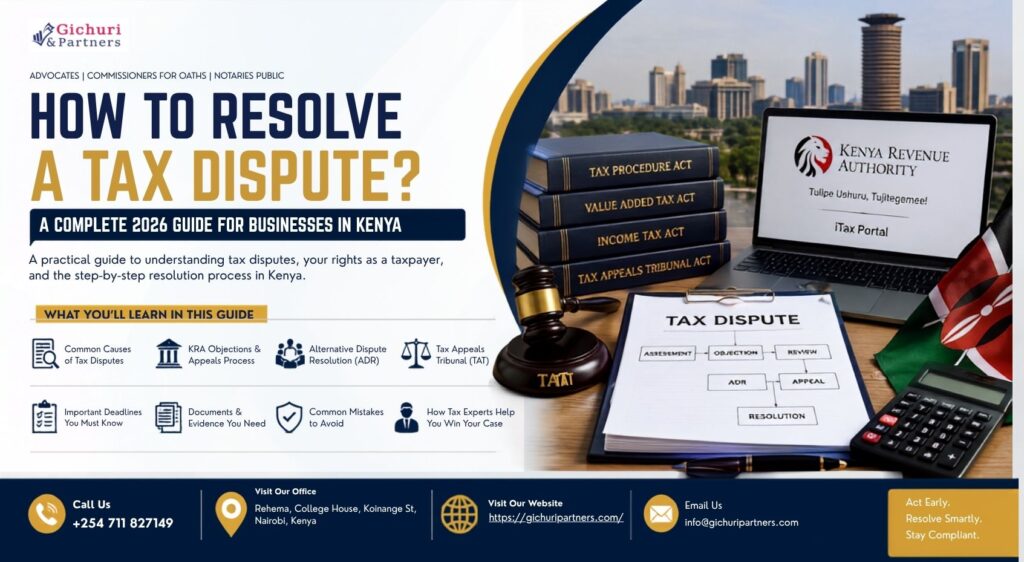


What happens behind the scenes before KRA issues a tax assessment? We will tell you exactly what happens. You see, KRA tax assessments are a normal part of what KRA is mandated to do as a tax authority. The Kenyan tax system relies on self-assessments whereby taxpayers declare their income and tax liabilities.
However, KRA can’t just believe everyone. They need to conduct their independent evaluations, do the math, and determine whether your declarations and real-time data match. In case of a mismatch, the system flags your account. What follows is a tax assessment sent to your ibox, either via email or the iTax portal. What most taxpayers don’t understand is that a tax assessment is not final. It’s an invitation by KRA to explain your tax position. If you think a tax assessment is incorrect, you can challenge it, a process called an objection.
That’s not the only way a tax assessment arises. KRA may issue a tax assessment following a KRA tax audit, compliance check, desk review, or investigation. This post explains everything you need to know about KRA tax assessments, including how to object, types of tax assessments, grounds for objection, evidence, and common mistakes to avoid when challenging a tax assessment.
If you have received an additional, default or amended assessment, our KRA tax assessment services in Kenya can help you review the figures, reconcile your records and determine whether the assessment should be accepted, corrected or challenged.
First Things First: What is a KRA Assessment?
A tax assessment is a determination by KRA of the tax amount it believes you owe them as a taxpayer. Below are instances when KRA may issue a tax assessment to a taxpayer:
- The taxpayer underdeclared their income.
- Tax returns contain errors and omissions.
- The returns contain disallowed expenses or deductions.
- The VAT input claims have been rejected.
- Incomplete or unavailable records.
- Failure to file tax returns.
- An audit revealed additional tax liabilities.
What To Expect From a Tax Assessment
We often encourage taxpayers to deeply review a tax assessment before deciding to pay the tax amount or challenge it. What should you look for in an assessment? A tax assessment will typically contain the following information:
- The type of tax, i.e., VAT, PAYE, MRI, Corporate, and Income Tax.
- The tax period under review. E.g., 2024-2025.
- The amount of tax assessed.
- The penalties and interest charged.
- The reasons for the assessment.
Therefore, before proceeding, understand the basis upon which KRA arrived at its findings. With this information, you know whether the assessment is justified or can be challenged using facts and legal grounds.
Types of Tax Assessments
KRA issues tax assessments under various circumstances. Understanding the type of assessments is the first step towards handling them the right way.
Self Assessment
This is where you declare your income as a taxpayer, calculate the tax owed to KRA, and file returns. KRA will review your returns and make adjustments if it believes the tax declared is incorrect.
Additional Assessment
When KRA determines that a taxpayer has paid less tax than what’s due, they issue their own version of assessment. This is called an additional assessment. Additional assessments arise after:
- Tax audits
- Compliance reviews
- Investigations
- Review of tax returns and financial records.
Default Assessment
A default tax assessment is issued when a taxpayer fails to submit a required tax return. KRA estimates the tax liability using the available data. Most default assessments are based on KRA assumptions, making them one of the most challengeable tax assessments.
Amended Assessments
As the name suggests, KRA issues an amended assessment after obtaining new information or identifying errors in the original assessment. They could increase or decrease the tax owed in the original assessment. It is also called a revised assessment.
Tax Audit Assessment
This is one of the most common tax assessments in Kenya. A KRA tax audit is a formal examination of a taxpayer’s financial records to determine whether they’re complying with tax laws. SMEs, companies, non-profits, and organizations are common targets of these audits.
Once KRA conducts an audit, it issues a detailed tax assessment based on its findings. If discrepancies are identified, the tax authority may issue an assessment with additional taxes, penalties, and interest.
Estimated Assessments
Where inadequate financial data is available, KRA may issue a tax assessment based on estimated income, sales, or tax liability. This is called an estimated assessment. If you believe the assessment is incorrect, you can challenge it by providing supporting documentation to prove KRA wrong.
Grounds For Objecting to a KRA Tax Assessment
As we said earlier, a KRA tax assessment is not final. The Tax Procedures Act allows you to challenge it if you believe KRA is wrong. This process is called a tax objection. Taxpayers dealing with complex or high-value assessments may seek professional KRA Tax Objection Services in Kenya to review the assessment, develop valid grounds of objection and prepare the supporting documentation required to challenge KRA’s findings. Below are the common grounds for objecting to a KRA tax assessment:
- Incorrect calculations, such as mathematical mistakes, double-counting income, incorrect application of tax rates, and errors when calculating penalties and interest.
- Failure to consider relevant documents: KRA overlooked documents like sales invoices, contracts, and payroll records that directly affect your tax position.
- Misinterpretation of Expenses: This is a common ground in corporate tax disputes. KRA may have misinterpreted the nature of an expense, terming it disallowed. A taxpayer can argue and show that such an expense is indeed allowed.
- VAT Input Dispute: Sometimes, KRA will deny VAT input claims. A taxpayer can challenge such an assessment if valid tax invoices exist and the supplies were used to make taxable supplies.
- Misinterpretation of Tax Laws: Misinterpretation of Tax Laws: If KRA interprets tax legislation differently from the taxpayer, a tax dispute may arise. Depending on the circumstances, the dispute may ultimately be resolved through KRA Alternative Dispute Resolution (ADR) or an appeal before the Tax Appeals Tribunal. Professional tax advice becomes particularly important when the dispute involves complex legal or technical interpretations.
- KRA Assumptions are Wrong: KRA may assume your tax position if the available data is inadequate. Taxpayers can object when the estimates are excessive and reliable records exist to show otherwise.
Evidence Required To Support a Tax Objection
The quality and adequacy of the evidence provided hugely affect a tax objection. Since the burden of proof in tax disputes lies with the taxpayer, you need to understand the kind of evidence required to demonstrate why you think a tax assessment should be amended or vacated. This evidence includes:
- Financial records such as cashbooks, trial balances, general ledgers, and audited financial statements.
- Transaction documents, including tax invoices, receipts, purchase orders, contracts, and agreements.
- Banking records such as bank deposits, payment confirmations, and statements.
- Employment records like payroll reports, payment schedules, and employment contracts.
- Tax records, including filed returns, VAT schedules, withholding tax certificates, and previous correspondence with KRA.
For complex assessments, professional KRA Tax Dispute Resolution Services in Kenya can help taxpayers review the evidence, reconcile supporting records, identify weaknesses in KRA’s findings and prepare a properly documented objection strategy.
How to Object to a KRA Tax Assessment
The tax objection process generally involves the steps below:
- Step 1: Reviewing the tax assessment
- Step 2: Gathering supporting evidence
- Step 3: Drafting the grounds of objection
- Step 4: File the Objection via iTax
- Step 5:Wait for the Objection decision and respond to any further requests from KRA.
For a detailed step-by-step guide, see our post on how to file a tax objection in Kenya.
Handling Complex KRA Tax Assessments
There is no simple tax assessment when dealing with KRA. However, some tax assessments are more complex than others and require a well-thought-out strategy and tax expertise. Such assessments include those involving:
- Transfer pricing
- Corporate restructuring
- International taxation
- VAT interpretation
- Legal interpretation of other tax clauses
Winding Up
A KRA tax assessment is not the final say. If you believe the assessment is inaccurate, excessive, or based on an incorrect interpretation of tax laws, you have the right to challenge it legally.
The key to successfully challenging a tax assessment is acting promptly, demonstrating valid grounds of objection and providing strong supporting evidence. Professional assistance from an experienced tax agent can also help you evaluate your tax position and develop an appropriate response strategy.
If you are facing an inaccurate, excessive or disputed KRA assessment, our KRA Tax Assessment Services in Kenya can help you review the assessment, prepare supporting documentation and determine the appropriate response, including an objection where necessary.