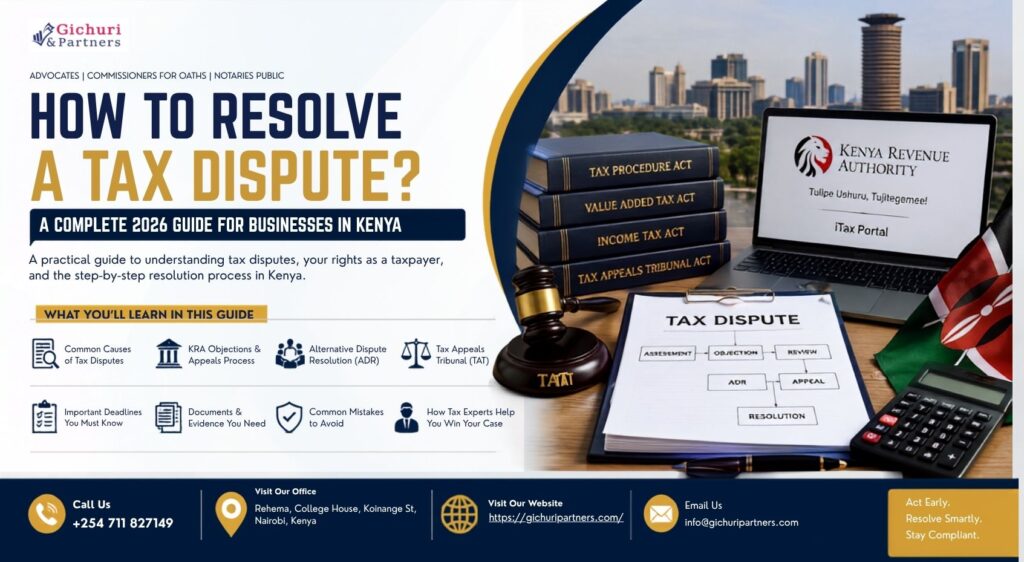


One of the best parts of the Kenyan tax landscape is providing a fair ground that allows taxpayers to challenge the Kenya Revenue Authority’s decisions. Whether the legal framework meets the expectations of the same taxpayers is another thing.
But the bottom line is, decisions made by KRA aren’t final. When you receive an unfavorable tax assessment, your financial world gets blurry. You first file a Notice of Objection and hope that the Commissioner will understand where the disagreement stemmed from.
If the Objection Decision is still unfavorable, you can explore the non-adversarial Alternative Dispute Resolution (ADR) process. If all goes well, you reach a settlement agreement with KRA. But since you’re here, it means all of the above was unsuccessful. What next?
The next step is to file a case with the Tax Appeals Tribunal (TAT). We’ve covered everything you need to know about the TAT before, so this post isn’t a repetition of that. Instead, it’s a practical guide on how to handle tax appeals in Kenya after an unsuccessful objection. We will also talk about what you can do to improve your chances of achieving a favorable outcome.
How to Handle Tax Appeals in Kenya
So, your tax objection or ADR has failed. What’s next? Most taxpayers feel defeated when KRA rejects their tax objection. They feel like this is the end, and they must pay the additional tax assessments as ordered by KRA. This is far from the truth.
First, an unfavorable objection decision or failed negotiation doesn’t mean you have to settle. Second, not all unfavorable decisions at this stage must end at the Tax Appeals Tribunal. So how do you know what’s next? Ask yourself the following to help you make the right choice:
- What aspects of the tax assessment is KRA challenging?
- Do you have sufficient supporting documentation?
- Is the dispute a question of facts, laws, or both?
- What tax amount is at stake, and what are the financial implications if the assessment is upheld?
Do not make the mistake of viewing the tax appeal process as an extension of the objection. The TAT is an independent body that requires both parties to present clear arguments based on facts and law, and supported by solid evidence.
If unsure, a tax expert can help you understand the strengths and weaknesses of your case. This helps you make an informed decision before filing the tax appeal. At Gichuri & Partners, we review the tax assessment, identify weaknesses in KRA’s position, and help determine whether pursuing an appeal is worthwhile.
How to Build a Strong Appeal Case
Once you’ve established that appealing the case is the best way forward, here’s what to do:
1. Organize Your Supporting Documents
As we mentioned earlier, the TAT deals with facts, tax laws, and solid proof. Arguments alone won’t take your case anywhere. Therefore, you must gather and organize all the documents that are relevant to your tax dispute. They include:
- Financial statements
- Tax returns
- Bank records
- Payroll records
- Correspondence with KRA (emails, notices, etc)
- Contracts and agreements
- Customs documentation
2. Identify the Real Issue
What are you and KRA fighting about? What’s the cause of the dispute? The real issue may stem from:
- Tax calculations
- Withholding tax obligations that were not honored
- Allowable business expenses
- VAT treatment of certain transactions
- Transfer pricing disagreements
- Custom valuation methods
Identifying the real issue is critical because it shapes your arguments and helps you choose the supporting documents that truly affect the outcome.
3. Develop a Clear Position
TAT expects your argument to show exactly how KRA’s position on the matter is incorrect, hence the grounds for appeal. Your appeal should be based on facts, evidence, and applicable tax laws. Emotional arguments and assumptions have no place in the tax appeals process.
Common Mistakes That Hurt Tax Appeals
You can determine the real cause of dispute, build a strong case, and present solid evidence, only for your case to be thrown out by the TAT for trivial mistakes. Here are common but avoidable mistakes that hurt tax appeals in Kenya:
- Missing Critical Deadlines: Appealing a case with the TAT is governed by procedural guidelines that must be honored. One of these guidelines is statutory timelines. The two key timelines here are filing a Notice of Appeal within 30 days of receiving KRA’s Objection Decision, and submitting supporting documents within 14 days after filing the notice. Failure to meet these deadlines jeopardizes your appeal.
- Poor Record Keeping: Incomplete records look bad when presented before the TAT. If you can’t produce key supporting documents, the Tribunal will have no choice but to side with KRA’s position.
- Contradicting Earlier Statements: Your options for legal arguments are heavily dictated by how you frame your arguments in the objection and ADR stages. Inconsistencies between the three can weaken your credibility.
- Presenting Weak Evidence: For you to succeed, you must support all your assertions with adequate evidence. Every argument should be backed by evidence whenever possible.
- Handling Complex Cases Without Professional Support: While the TAT allows taxpayers to self-represent, it’s not advisable to undertake such cases alone. Professional guidance is paramount, especially where technical tax laws, accounting principles, and procedural requirements are involved.
What Happens During a Tax Appeal?
What should you expect during a tax appeal in Kenya? Here is the tax appeals process in a nutshell:
- Filing a Notice of Appeal
- Filing supporting documents
- Exchanging official submissions with KRA
- Presenting evidence
- Attending hearings
- Awaiting the Tribunal’s decision(it can uphold, vary, or set aside KRA’s tax assessment)
See our Tax Appeals Tribunal guide for a detailed guide on what to expect.
How We Can Help With Tax Appeals in Kenya
Do you want to appeal a tax assessment in Kenya? We can help you at Gichuri & Partners. We are a registered KRA tax agent offering a wide range of tax dispute resolution services, including tax objections, ADR, and tax appeals. Our tax appeal support services include:
- Independent review of KRA tax assessments
- Case evaluation to identify appeal prospects
- Preparation of appeal documents
- Evidence analysis
- Case preparation
- Representation during tribunal hearings and before KRA
- Handling all KRA correspondence on your behalf
- Professional support during negotiations and settlement discussions
- Post-appeal support
We’ve been helping individual taxpayers and businesses all over Kenya handle tax matters without stress for over 10 years. Our tax experts understand the challenges taxpayers face when dealing with tax assessments, KRA audits, objections, and appeals.
Final Thoughts
Tax appeals in Kenya entail a strict and multi-step statutory process. You need to file a notice to appeal within a stipulated time, submit appeal documents, develop a case, argue why you think KRA’s position is incorrect, and provide adequate evidence.
Remember, it’s not an extension of the objection process, but a fresh opportunity to challenge KRA’s decision before an independent Tribunal. Success depends more on how you present your case, preparation, and strong evidence. This is where professional guidance plays a significant role. Are you planning to appeal a tax assessment at the Tax Appeals Tribunal? Book a free consultation with us to discuss your case and see how we can help you get a favorable outcome.