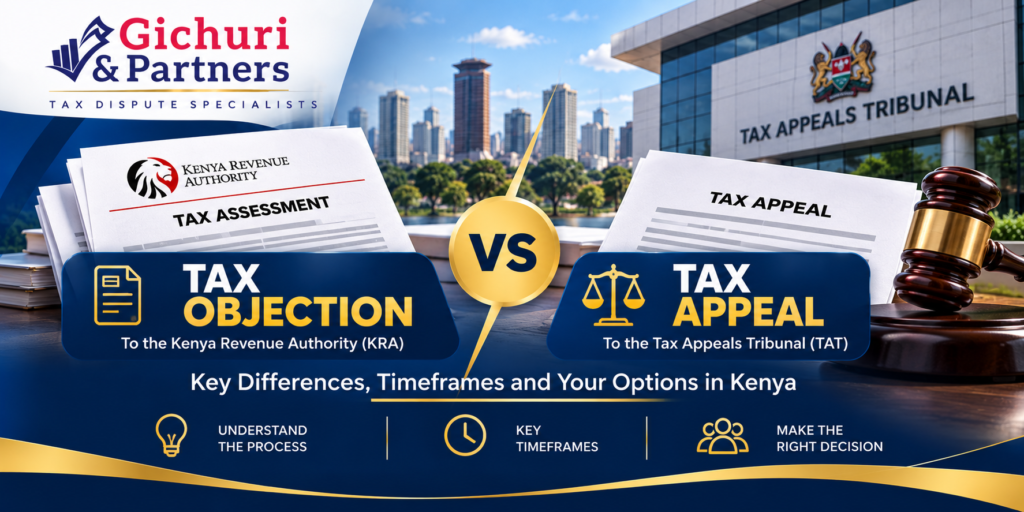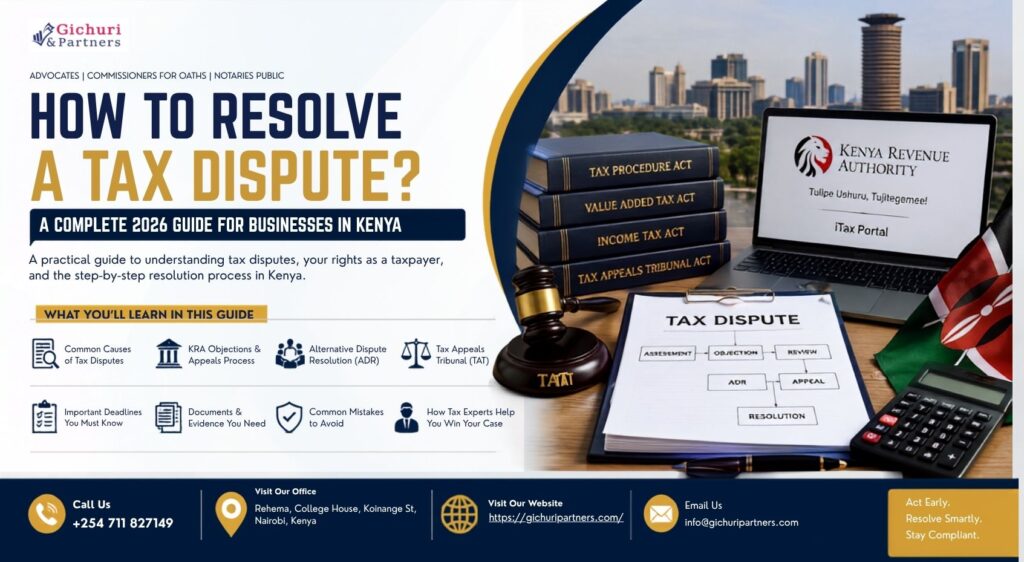

Disagreeing with a KRA tax assessment is one thing, but filing a valid KRA tax objection successfully is another. How you present your case determines how far your argument will go and whether your claim will stand.
We’ve discussed the tax objection process at length, including the statutory timelines, how to state your grounds of objection, and the need for supporting documents to demonstrate why KRA’s assessment is incorrect. But what are these supporting documents that you need to file a valid KRA tax objection?
The required evidentiary documents vary depending on the tax head involved, the grounds of objection, and the specific figures you are challenging. The documents you need to challenge an income tax assessment differ from the ones you need to dispute a Value Added Tax (VAT) assessment. This guide is a practical checklist of the documents for a KRA tax objection.
What Documents Are Required for a Valid KRA Tax Objection?
Section 51 of the Tax Procedures Act sets out everything you need for your tax objection to be valid. These include:
- Precise and clear grounds of objection.
- The amendments/prayer sought to correct the tax assessment.
- Reasons for the amendments sought.
- Relevant documents to demonstrate how KRA is wrong.
- Pay the undisputed tax or apply for an extension to pay it.
Now, the Act doesn’t provide a list of universal documents to attach to your tax objection letter. This is because the relevant documents depend on the particular issues or reasons you are disputing. However, there are general documents that anyone challenging a KRA tax objection must submit. We will provide a checklist of these general attachments before diving into tax head-specific documents.
General Checklist: General Documents to Prepare Before Filing a KRA Tax Objection
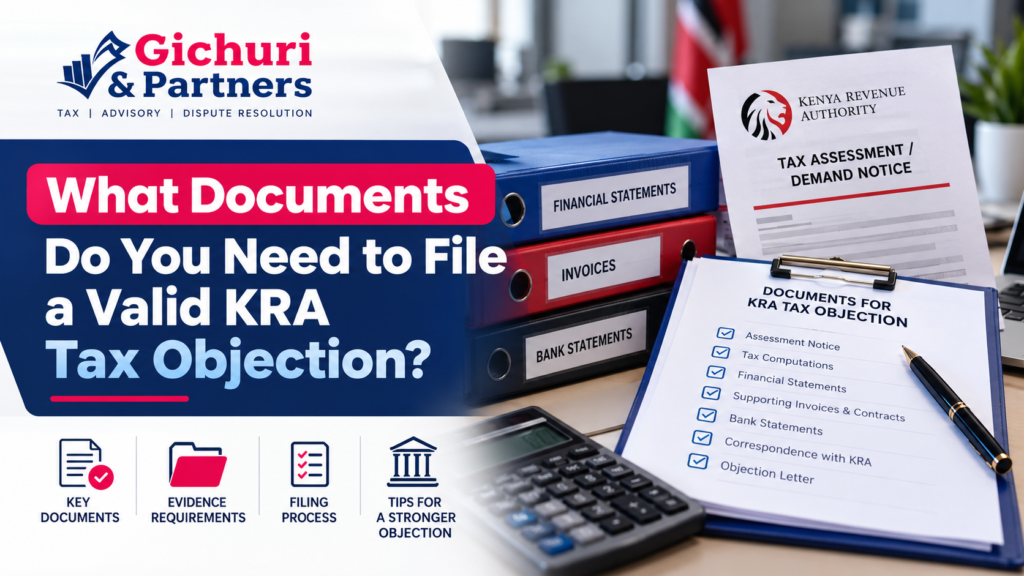
Here is a general checklist of documents for a KRA tax objection needed during filing:
- A copy of the KRA tax assessment, demand, or any other tax decision you want to challenge.
- A notice of objection stating your specific grounds of objection.
- A statement or explanation of the amendments you want KRA to make and the reasons for each amendment.
- Relevant tax returns and amended returns, where applicable.
- Supporting schedules and documents relating to each disputed item.
- Correspondence with KRA, including emails, letters, SMSs, and audit queries and your responses.
- Payment receipts and relevant records relevant to the disputed figures.
- Records to confirm that the undisputed tax has been paid or an application for an extension
Once you submit these documents, retain evidence of your submission, for example, the iTax acknowledgement receipt. Now let’s get into the specific documents required for the different tax heads in dispute.
Documents You Need for an Income Tax Objection
An income tax assessment can be wrong for various reasons, including:
- Disallowed expenses
- Overstated income
- Incorrect capital allowance calculations
- Unrecognized tax credits
Depending on your grounds of objection, include the following documents for an income tax objection:
- Financial statements.
- Trial balance and general ledger.
- Sales invoices and ledgers.
- Purchase invoices and receipts.
- Supplier statements.
- Bank statements and reconciliations.
- Loan agreements.
- Payroll records.
- Asset registers.
- Capital allowance schedules.
- Withholding tax certificates and payment records.
- Tax computation schedules.
Real Life Example
You are a business person who recently secured a KES 2 million loan to expand your business. The money was deposited into your business account, and KRA flagged it as undeclared income, thereby issuing an additional tax assessment. To challenge this assessment, you must include the various supporting documents, including the loan agreement, transfer records, and other relevant accounting entries.
Documents You Need for a VAT Tax Objection
Value Added Tax(VAT) is one of the tax heads where most businesses disagree with KRA. VAT tax objections arise for various reasons, including:
- KRA disallows input VAT.
- KRA identifies undeclared sales.
- You, the taxpayer, dispute the treatment of particular supplies.
- KRA finds discrepancies between filed VAT returns and transaction records.
The relevant documents in a VAT tax objection depend on the claims made and relevant legal requirements. Below is a checklist for the documents required in a VAT objection:
- VAT returns for the period under review.
- Relevant electronic tax invoices.
- Input VAT schedules and purchase ledgers.
- Purchase orders, delivery notes, and goods received notes.
- Sales invoices, sales ledgers, and credit notes.
- eTIMS records and reconciliations.
- Customs entries and input VAT payment records for imported goods.
- Calculations or reconciliations explaining the discrepancies between your VAT returns and KRA figures
Real Life Example
You imported a tractor for your agribusiness, and KRA disallowed the input VAT for that transaction. In that case, your tax objection must be supported by documentation like proof of payment, the supplier’s valid tax invoice, purchase order, delivery documentation, and accounting records.
Documents You Need For a Customs Tax Objection
Tax disputes in customs tax can involve a myriad of disagreements between KRA and the taxpayer. They include:
- The value assigned to imported goods could be too high.
- The tariff classification applied.
- Country of origin.
- Duty and taxes charged.
The specific evidentiary documentation you need varies depending on the dispute and your grounds of objection. Here’s a checklist of the various documents you might need for a customs tax objection.
- Customs entry or declaration.
- Commercial invoices.
- Packing lists.
- Purchase orders and supply contracts.
- Airway bills and bills of lading.
- Freight invoices.
- Insurance documents.
- Bank transfers, letters of credit, and other payment proof.
- Certificate of origin.
- Product descriptions and specifications
- Remission approvals and exemption letters.
- Customs assessment and payment record.
Real Life Example
KRA used an incorrect customs value on your imported goods. In this case, your tax objection needs to explain how you determined the declared value and provide evidence of all the transaction, payment, freight, and insurance costs.
Documents You Need for a Rental Income Tax Objection
For the rental income tax regime, tax disputes mostly arise when KRA believes a property owner received more rent than they declared. Sometimes, it is because the taxpayer applied the wrong tax treatment. The documents required to object to a rental income tax dispute vary depending on various factors:
- Does the property fall under the residential rental income tax regime?
- Is the property taxed under the annual income tax regime?
Prepare the following documents if you are facing a rental income tax dispute:
- Tenancy agreements and lease contracts.
- Rent schedules.
- Bank and mobile money statements.
- Rent receipts and tenant payment records.
- Property management systems.
- Records of vacancies, rent-free periods, and arrears from tenants.
- Documents explaining security deposits and other receipts.
- Rental income returns for the disputed tax period.
- Tax payment receipts.
- Withholding tax certificates.
- Property ownership documents.
- Expense invoices and payment records.
Real Life Example
KRA assesses you on KES 100,000 in rental income, but you only received KES 80,000 as rent for that month, and 20,000 was a security deposit for two new tenants. In that case, you need to submit tenancy agreements, rent schedules, bank statements, and receipts explaining the security deposits.
Note: The tax regime for your rental income matters. For example, the KRA residential rental income tax is based on gross rent received. It doesn’t allow deductions for expenses, capital allowances, and other losses.
Tips for Submitting Documents for a KRA Tax Objection
So you know which documents you need to support your tax objection? That’s a great first step. The next important step is to submit them correctly. The following tips will guide you in submitting documents for a KRA tax objection like a pro:
- Use PDF format: Upload every document as a PDF. Avoid photos, cropped edges, and Word documents with disorganized page layout.
- Name the files consistently: Name your files in a way that the officer already has an idea of what kind of file it is before opening it. For example, you can name a bank statement as Bank Statement Jan-Mar 2025.pdf.
- Add an index: List each ground of objection alongside the documents (annexes) that support it.
- Label the documents (annexes) in order: Use annex A, B, C, and so on, and cite these labels in the grounds of objection.
- Keep the files within the provided upload size limits: You can compress large documents without losing legibility.
- Reconcile the figures: Compute the figures afresh, compare them with KRA’s figures, and show the variance.
- Check consistency: Ensure the figures and facts in your objection agree with the supporting schedules and source documents.
- Keep a complete copy of the tax objection: Retain a copy of the objection letter, supporting documents, and proof of submission.
What Happens When You File an Objection Without The Required Documents?
When you file an objection without supporting documents, there are two probable outcomes. These are:
- KRA will reject the objection for being invalid: KRA may determine that your objection has not been validly lodged and doesn’t meet the statutory requirements.
- Your objection may fail on merit: Lack of evidence to support your grounds of objection and claims.
Final Thoughts
The documents needed for a KRA tax objection depend on the tax head, issues raised in the assessment, and grounds of objection. While submitting the right documents doesn’t guarantee a favourable outcome, it strengthens your objection and lays a good foundation in case your dispute escalates. If you’re unsure of where to begin preparing the documents for your tax objection, consider seeking professional assistance. A tax dispute specialist like Gichuri & Partners will review the tax assessment, identify grounds of appeal, and the relevant supporting evidence.