
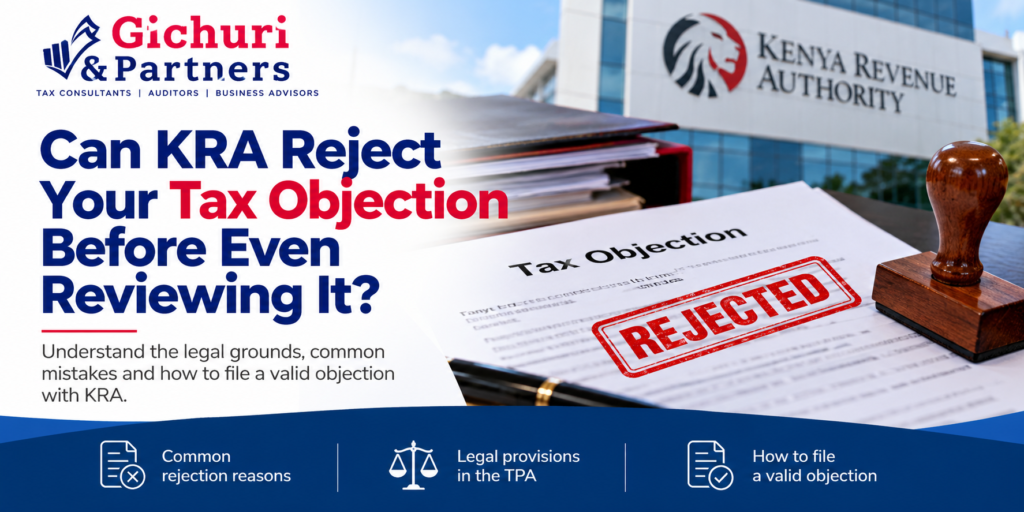
Imagine taking the time and effort to draft a tax objection, only for KRA to reject it even without reviewing its content? Can that happen? Yes. KRA can reject your tax objection even before reviewing it if it deems it invalid. It doesn’t matter whether your arguments against the tax assessment are correct. If your objection fails to meet the legal requirements provided by Section 51 of the Tax Procedures Act, KRA will dismiss it immediately.
In this post, we examine why KRA may reject your tax objection before even reviewing it. We will also look at why the objection stage is the most important part of your tax dispute and why you should consider professional help at this stage.
Can KRA Reject Your Tax Objection Before Even Reviewing It?
Yes, KRA can reject your tax objection even without reading what’s in it. You could have a legitimate reason to prove that KRA made an error in its tax assessment, but how you present your objection matters.
If your objection didn’t fulfill the requirements set out in the Tax Procedures Act, specifically Section 51, it might be rejected on arrival. KRA may not wait to see the substance of your dispute if your objection is invalid. However, courts have ruled that KRA can’t simply ignore an invalid tax objection. It must issue a formal objection decision within 60 days.
Why Would KRA Reject a Tax Objection Without Reviewing its Merits?
To answer this question, we need to revisit what makes a tax objection valid, according to the Tax Procedures Act. Under Section 51 of the Tax Procedures Act, a valid objection should:
- Be lodged in writing to the Commissioner within 30 days of being notified of the tax decision.
- State precisely the grounds of objection.
- State precisely the amendments required to be made to correct the tax decision/assesment.
- State the reasons for the amendments.
- The taxpayer has paid the entire amount of tax due under the assessment that is not in dispute.
With that in mind, below are some of the common reasons KRA may reject your tax objection before even reviewing it:
1. Failure to State Precise Grounds for Your Objection
Filing a tax objection is not simply disagreeing with a KRA tax decision in writing. You must explain why you believe the assessment is incorrect or wrong. Your grounds of objection should match the reasons given for the assessment.
For instance, in the case of disallowed business expenses in your taxable income calculations, you should identify the exact expenses in dispute, explain why you think they are deductible, and provide relevant supporting legal and factual data supporting your position. Vague statements like the “assessment is unfair” or “the tax amount is incorrect” without explanations will have your objection rejected instantly.
2. Missed Objection Deadline
As stated in the Tax Procedures Act, you must lodge your tax objection within 30 days after being notified of the tax assessment. While KRA might grant you an extension if you have good reasons for missing this deadline, filing after the deadline is risky. It puts your ability to challenge the assessment in jeopardy. KRA can decide to reject your application, uphold the initial tax assessment, and initiate enforcement action. Even if you escalate the matter to the Tax Appeals Tribunal (TAT), the tribunal will side with KRA because you violated a procedural requirement.
3. Failure To Submit All Relevant Supporting Documents
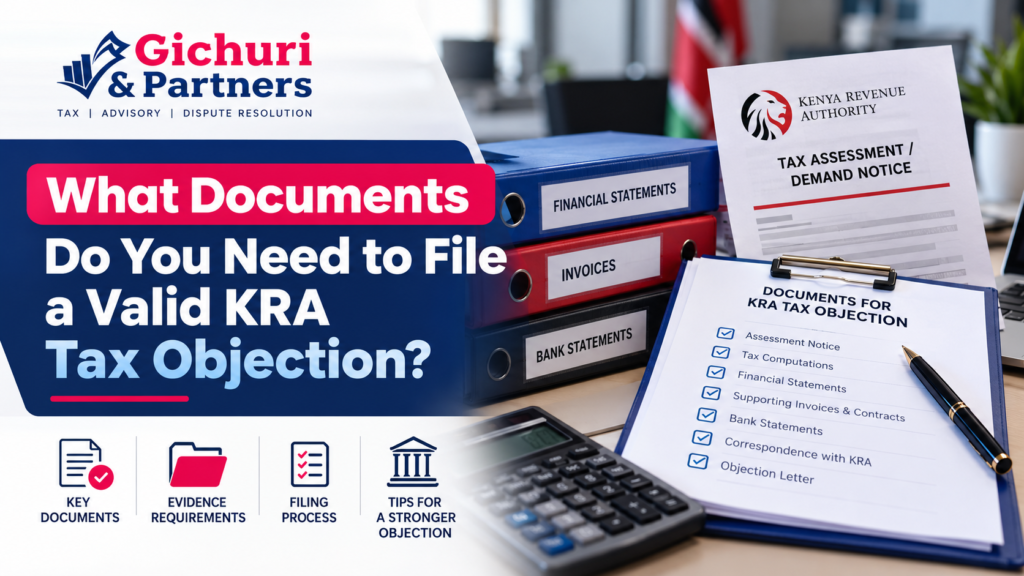
Do you know that for every stated ground of objection, there must be a corresponding supporting document? If you have 5 objection grounds but just 3 pieces of evidentiary documentation, KRA will view your objection as incomplete, thus invalid. The documents should also be relevant to the particular tax head and the issues in dispute. No matter how lengthy or sensible your explanation is, without the evidence, your tax objection is weak and easy to dismiss.
4. Failure to Pay the Undisputed Tax
This is one of the most common reasons for KRA rejecting a tax objection. Remember, as a tax authority, KRA’s primary job is to collect taxes on behalf of the government. So, if they see you hesitating to pay the taxes you owe, you become a target. If you want to have a healthy dispute resolution process with KRA, pay the undisputed tax amount before filing a tax objection.
For instance, suppose KRA disallowed KES 200,000 in input VAT deductions in a bulk purchase from a supplier. On your end, you have a clear ETR invoice showing this transaction and the deductible expense. At the same time, there is an undisputed tax of KES 500,000 that needs to be paid for that month.
A taxpayer might assume that since there is an issue with the disallowed input VAT, a tax objection might buy them time to pay even the KES 500,000 they owe. But failure to pay the KES 500,000 will invalidate the tax objection for the KES 200,000.
5. Not Specifying The Corrections You Want KRA To Make
You can’t just disagree with KRA, state your grounds of objection, and expect them to figure out what to do. Yes, your argument might be sensible and prove that KRA made a mistake, but you must spell out what changes you want the tax authority to make for your assessment to be correct.
Do you want KRA to reinstate your previously disallowed business expenses? Do you want it to change the tax category of a transaction or income? Explicitly state the amendments you seek in your tax objection.
Why the Tax Objection Stage is the Most Important Part of Your Tax Dispute
One mistake that taxpayers make is viewing the tax objection process as just another procedural step towards litigation if the case escalates. It is not. In fact, it’s the foundation of your defense and the cornerstone of your tax dispute resolution process. It’s your first and the most critical formal opportunity to challenge a KRA decision. How do you challenge a KRA decision? Through facts, applicable tax laws, and evidence.
The tax objection process influences the outcome of the entire tax dispute. Here’s why it’s the most important stage of the tax dispute resolution process:
1. Determines Whether Your Dispute Can Proceed
Even before reading the content of your tax objection, KRA first establishes its validity. If it fails to meet the validity requirements, you risk losing any chance to legally challenge the incorrect tax assessment further. In most cases, especially when the deadline is already approaching, KRA will dismiss your objection, consequently upholding the initial tax decision.
It can then move forward with tax enforcement measures, such as issuing an agency notice to recover the tax debt. You may delay the enforcement by appealing the case, but the Tribunal is likely to uphold KRA’s objection decision on the grounds of your objection being invalid.
2. Establishes the Foundation of Your Case at the Tribunal
Appealing a tax dispute case at the Tax Appeals Tribunal is not a fresh attempt to challenge a KRA tax decision. It’s not the case of a child going to ask for something from the father because the mother refused to give in. No. An appeal heavily relies on the grounds and evidence presented during the objection stage. If your argument at the objection stage is generalized and vague, you may find it hard to build a convincing case at the appeal stage.
3. It’s a Solid Opportunity to Save Time and Money
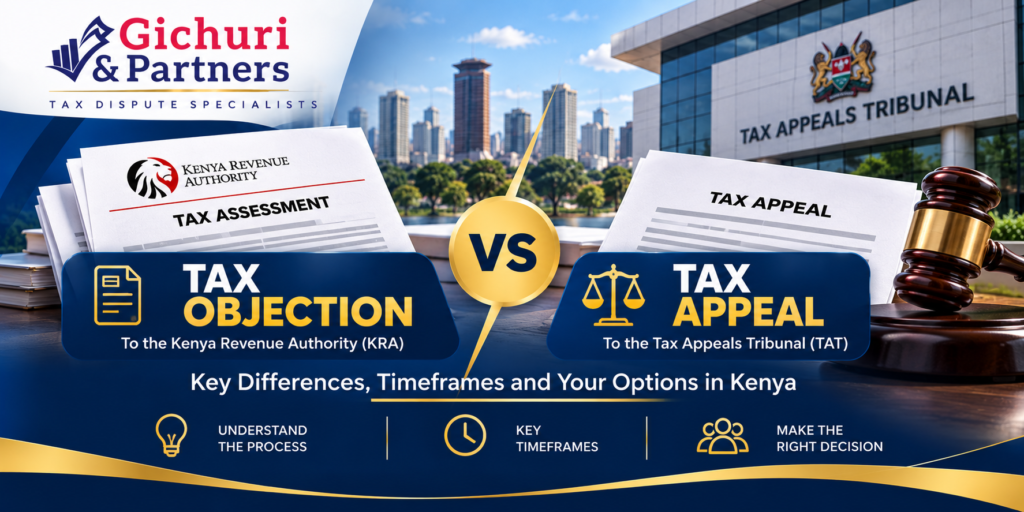
From a legal and financial angle, you’re better off solving a tax dispute at the objection stage than later. The Tax Procedures Act gives KRA up to 60 days to review a tax objection and issue an objection decision.
If you prepare a valid and convincing tax objection, you will probably resolve the dispute within the 60 days. The only financial expenses expected at this stage are professional fees if you hire a tax objection specialist.
On the other hand, tax appeals take time.TAT cases take up to 2 years due to back log of cases and complexity of cases. You also need to pay KES 20,000 to file an appeal. Add legal counsel and tax specialist fees and you’ll see how solving the case at the objection process could have saved time and money.
Consider Professional Assistance When Preparing Your Tax Objection
We’ve seen how critical a tax objection is in the tax dispute resolution process. It can make or break your case. While you may understand why you disagree with a KRA tax assessment, putting that in writing is not easy, especially if you don’t have a background in accounting or tax laws. You need a tax objection specialist to help you explain the disagreement and your why in a way that satisfies the law.
A professional will identify the strongest grounds of objection, prepare relevant documents, reconcile your tax records with KRA figures, build a strong case and ensure your objection meets all the legal requirements. It may not guarantee that KRA will allow your objection, but it can reduce avoidable errors and give you a solid fighting chance. If you’ve received a tax assessment you disagree with, engage a tax professional right away. They can review your assessment and help you prepare and lodge a valid tax objection from the beginning, to avoid getting a rejection from the KRA.