
You’ll be minding your business as a taxpayer, only to get a concerning email from the Kenya Revenue Authority (KRA) that you owe them a certain amount in unpaid taxes, penalties, and interest. Erroneous penalties and fines are scary because half of the time, you aren’t aware that you owe KRA any unpaid taxes. That is what happened with one of our clients who unknowingly selected the wrong tax obligation while filing their yearly tax return.
Our client, a student, was filing their yearly NIL tax return and erroneously selected “income tax-rental income” as the tax head, instead of “income tax-resident individual.” They went ahead and relaxed, assured that they had fulfilled their obligation of filing their tax return. It was only after 6 months that KRA sent a demand notice for unpaid rental income tax that they realized they had messed up.
In panic mode, our client explained their predicament, and we started the process of reversing the erroneous tax debt, accrued penalties, and interest. Penalties and interest aren’t just caused by erroneous charges. Sometimes, you may be facing serious cash flow or operational problems leading to late returns and tax payments.
Other times, you may receive a tax assessment that you disagree with, leading to a lengthy tax dispute with KRA. Penalties and interest continue to accrue as you challenge the assessment in court or the Tax Appeals Tribunal. The good news is that you can negotiate KRA penalties and interest, depending on the circumstances. Your options include applying for a tax amnesty, a waiver, and a reversal for erroneous charges. Each option has eligibility requirements, and not every taxpayer qualifies for the various relief options.
Can KRA Waive Interest on Unpaid Tax?
Yes. KRA may provide relief from penalties and interest under applicable tax relief provisions. However, there are conditions, and it’s not guaranteed that KRA will automatically forgive what you owe.
That said, most KRA penalty and interest relief options work only when you pay the principal tax. You can pay it as a single lump-sum settlement or apply for an installment payment plan via iTax. Before applying for the relief, establish why KRA imposed the charges, the tax periods they cover, and the conditions for getting the particular relief you seek.
How to Negotiate KRA Penalties and Interest
Below are the available options to negotiate accrued penalties, interest, and fines with KRA:
1. Apply for the KRA Tax Amnesty (2026)
Do you have accrued penalties and interest on older tax liabilities leading up to December 31, 2025? The KRA Tax Amnesty 2026 is your ideal option. The program provides 100% relief on all penalties and interest. It took effect from 1st July, 2026 and will run until 31st December 2026. Do you qualify for the KRA Tax Amnesty 2026? Here is who qualifies:
- You have already paid the principal tax in full: If you have, you automatically qualify for the relief and don’t need to submit an application.
- You owe the principal tax: If you still owe the principal tax, you automatically qualify for the relief as long as you pay the tax on or before 31st December 2026.
- You have unfiled returns: You can file the late returns and pay the principal amount where applicable. For late NIL returns, all you need to qualify for the relief is to file the unfiled returns, and you’ll automatically get the penalty and interest waiver.
- You can’t pay the principal tax at once: If you want the penalty and interest relief but can’t afford to pay the principal amount in full, apply for an installment plan to qualify for the amnesty. However, you must make sure that the last installment is made before the amnesty period elapses.
2. Apply for a KRA Penalty Waiver
A waiver is a request to KRA to review your tax records and overall compliance and cancel eligible penalties, interest, and other charges. It is also called a remission. How does it differ from a tax amnesty? A tax amnesty provides relief under a program, but a waiver is an individual request to assess your case and supporting documents to provide relief.
How to Apply for a KRA Penalty Waiver
You can apply for a KRA penalty waiver online via iTax or physically through your nearby Tax Service Office (TSO). Here’s how to apply for a KRA penalty waiver like a pro:
- Write a clear justification for your non-compliance and provide supporting documents.
- Explain what caused the non-compliance, how it affected your ability to pay the tax or file your returns, and what you are doing to address the problem.
- Pay the principal tax or apply for a payment plan on iTax.
- Check your overall tax compliance position and reconcile your tax records before applying for the waiver.
- Submit the waiver application via iTax or drop it off at your nearest Tax Services Office.
- Download or keep the acknowledgement receipt/reference for follow-up.
KRA may approve fully, partially, or reject the waiver request after reviewing it. An application doesn’t automatically remove the charges. If you’re unsure how to go about the application or how to present your case, our KRA penalty and interest waiver service is designed with you in mind. We will review your tax position, recommend the most appropriate step forward, and help prepare supporting documentation.
3. Request a Reversal of Erroneous Penalties and Interest
What if KRA applied the penalties and interest due to some misunderstanding, an honest filing mistake, or an incorrect assessment? In such a case, you don’t need a waiver. You need is a reversal of the erroneous charges. A reversal is used to correct penalties and other charges that should not have been imposed in the first place. You are asking KRA to correct an error, not forgive a valid charge. But it is still a negotiation. Here are situations when you can request a reversal:
- Wrong tax obligation: KRA may have assigned the wrong tax obligation to your PIN due to errors during registration, third-party input mistakes, or system mismatches.
- Payments made outside iTax: In rare cases, a taxpayer may file returns in time but use an unacceptable channel to pay the tax amount. If the payment is not reflected on the iTax system, KRA may impose penalties and interest.
- Electronic tax system errors: System glitches, update lags, and system errors may trigger erroneous tax liabilities and penalties.
How to Request a Reversal for Erroneous Penalties and Interest
Follow these steps to request a reversal:
- Identify the erroneous charges on your iTax ledger.
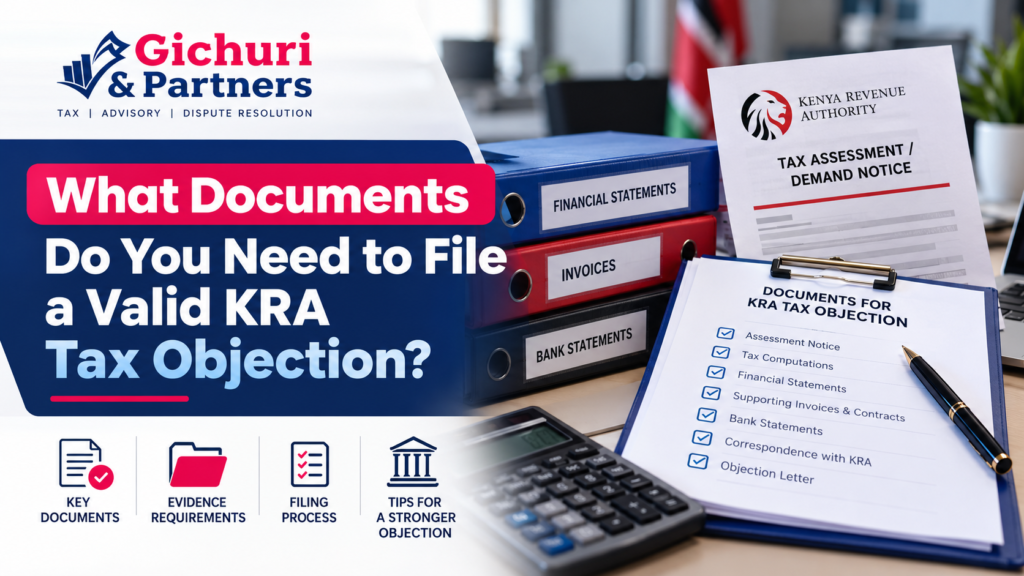
- Gather supporting documentation to show how the charges are incorrect.
- Write and submit a formal application for reversal at KRA’s Debt Office/Tax Service Office. Explain why you think the charges are erroneous and attach the supporting documents.
KRA will review your application, request additional documents if needed, and determine if your case meets the requirements for reversal.
Which Option Suits You Best?
The right option for negotiating KRA penalties and interest depends on why KRA imposed the charges and the tax period involved. For instance, you can’t apply for a tax amnesty if your penalties and interest involve the tax period after 31st December 2025. This is where professional tax assistance comes in handy. An experienced tax specialist will help you identify the negotiation option that best suits your particular case. They will review your tax position, reconcile your tax record with KRA figures, identify why and how the charges arose, and determine the best way forward.
Bonus Tip
Do not confuse a penalty and interest relief request with a dispute over whether you owe the principal tax or not. If you believe KRA made a mistake when assessing your taxes, what you need is to challenge the tax assessment, not negotiate relief.
If you present a strong argument and back it up with supporting documents through a tax objection, KRA may actually vacate all the tax liabilities, including the principal tax, penalties, and interest. You can even escalate the matter to the Tax Appeals Tribunal and have an independent body resolve the dispute between you and the KRA.
Final Words
You can negotiate KRA penalties and interest through a tax amnesty, waiver application, or reversal request for erroneous charges. However, the eligibility varies from one option to another. Review your charges, why they were imposed, the involved tax period, and the tax head before choosing what method to use. Better yet, consult a tax expert to help you identify the most appropriate penalty-relief method to use.