

Understanding the Tax Objection Process in Kenya: What Every Taxpayer Should Know. When most taxpayers get into a tax dispute with KRA, they see it as a crisis, a hindrance to their life or business running smoothly. But truthfully, tax disputes are a normal part of dealing with tax authorities across the globe, not just in Kenya.
That’s why legal frameworks exist that allow both parties to prove their position. When you receive a KRA tax assessment, audit finding, or other tax decision that you disagree with, you have the right to challenge it through the tax objection process.
We have already covered the mechanics of filing a tax objection in Kenya, so this is not a repetition. Instead, it’s a deeper look into the whole process behind a single tax objection- the legal framework, internal review process at KRA, escalation paths, and strategic decisions that often matter more than the paperwork. Keep reading to discover everything you need to know about the tax objection process in Kenya.
Understanding the Tax Objection Process in Kenya
When covering the mechanics of filing a tax objection in Kenya, we talked about avoiding technical mistakes like missing deadlines and presenting vague grounds. So what happens behind the scenes, even when you follow the practical parts to the letter? Here is what you’re stepping into when you get started on a tax objection process in Kenya:
The Legal Foundation
The tax objection process in Kenya is guided by provisions in Section 51 of the Tax Procedures Act, 2015 (TPA). One legal aspect holds a lot of weight during the objection process: statutory timelines. Two numbers stand out here: 30 and 60. Taxpayers dealing with complex or high-value assessments may seek professional KRA Tax Objection Services in Kenya to review the assessment, identify valid grounds of objection, prepare supporting documentation and ensure the objection complies with the applicable statutory requirements.
When a taxpayer receives a tax decision from KRA (assessment, audit report, or legal notice), they have up to 30 days to lodge a Notice of Objection. In turn, KRA has up to 60 days to review this objection and issue an Objection Decision.
If you miss your 30-day deadline, you lose your right to object to the tax decision. On the other hand, KRA loses its right to pursue further settlement discussions if they fail to issue an Objection Decision within the 60-day window. A good example of how important these timelines are is a 2023 High Court case in which the court ruled that a tax objection is deemed allowed if the taxpayer doesn’t receive an objection decision within 60 days.
In the Eastleigh Mall vs KRA case of 2023, KRA was demanding KSH 360 million in unremitted corporate tax, VAT on commercial rent, and PAYE. Eastleigh Mall filed a tax objection, a case that ended up in the Tax Appeals Tribunal. The Tribunal ruled in favor of KRA. When the case escalated to the High Court of Kenya, the court overturned the Tribunal’s decision to dismiss the mall’s appeal.
Reason: KRA failed to issue its decision within the legal 60-day timeline.
What Happens Inside KRA When You Object to a Tax Decision
When you hit submit on iTax, and your objection letter reaches the KRA offices, their first job is to validate your tax objection. They check the following:
- Grounds of appeal
- Supporting documentation
- Proper structure/form of the application
KRA has 14 days to flag an objection as invalid if it lacks any of the above requirements. This marks the first hurdle that your objection must overcome. Most tax objections die here, not because the arguments were not solid, but because it was poorly constructed.
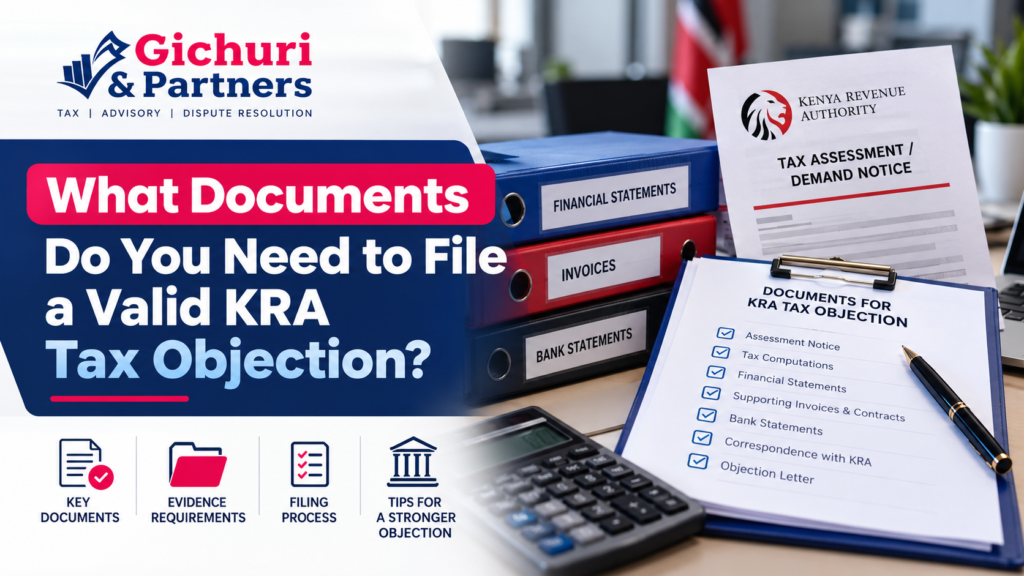
If you want to avoid this trap, seek professional assistance from a registered KRA agent who specializes in tax dispute resolution services. If your objection passes this hurdle, it moves to the next step: substantive review. This is the stage where KRA reaches out to seek clarification and request additional documentation. These include payment schedules, contracts, bank statements, and other records that support your grounds of objection.
Note: If KRA requests additional information or documentation, this resets the 60-day clock. The tax authority now has 60 days from when they requested additional documents to issue an objection decision.
One mistake taxpayers make at this step is staying silent after KRA’s additional requests or delaying submission of the requested documentation. If you do this, you give KRA justification to delay the objection decision or stall your case. But if you provide everything they requested, they should provide an objection decision within the stipulated time. Failure to do so is their legal undoing, because, by tax laws, your objection will be deemed allowed.
The Escalation Ladder: What Next After KRA’s Objection Decision
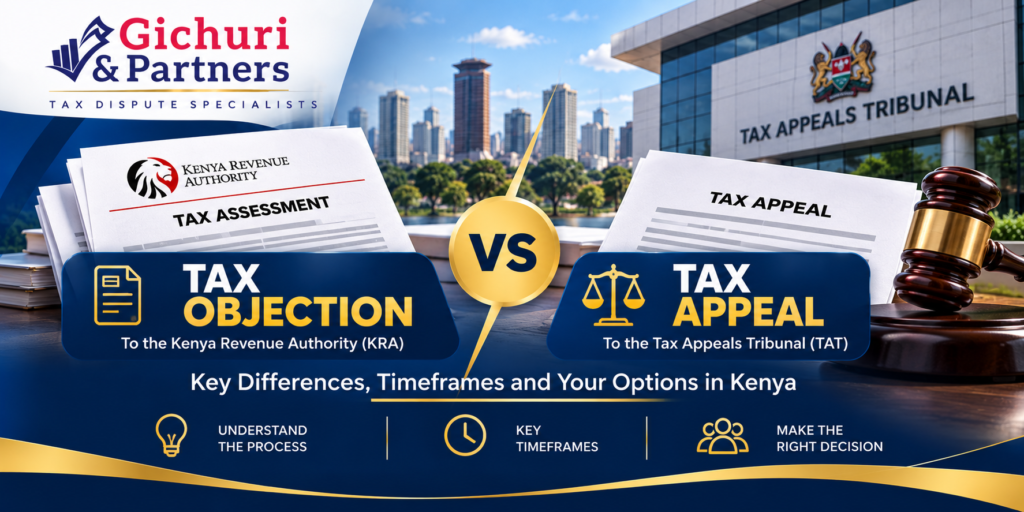
After KRA issues an objection decision, the dispute may proceed through different resolution pathways depending on the circumstances of the case. These may include the Alternative Dispute Resolution (ADR), or an appeal before the Tax Appeals Tribunal (TAT).
Kenya’s tax dispute resolution pathway has changed over time, and in 2026, both taxpayers and KRA are leaning towards the alternative dispute resolution framework (ADR). See our ADR explainer to understand how this process works and the benefits of settling KRA disputes through ADR.
However, the Tax Appeals Tribunal (TAT) remains the default escalation path when a taxpayer is dissatisfied with an objection decision. Let’s look at each escalation pathway and how you should choose the right one for you.
- Tax Appeals Tribunal: The Tax Appeals Tribunal Act, 2013, allows taxpayers to appeal their case to the Tax Appeals Tribunal if they are dissatisfied with KRA’s tax decision. This is an independent quasi-judicial entity that decides tax disputes on merit. It is also governed by a legal framework, including statutory timelines and procedural requirements. For example, you must settle the undisputed tax in full or arrange to do so before filing a Notice to Appeal.
- Alternative Dispute Resolution (ADR): ADR was introduced in 2015 to provide a non-adversarial pathway that lets taxpayers and KRA reach common ground during tax disputes. It is a facilitated negotiation between the taxpayer and the KRA Commissioner. Although it still follows a legal framework, it’s not bound by the technical procedures, delays, and rising costs that come with the judicial process.
What happens when both the TAT and ADR fail to give you a satisfactory outcome? This is where the High Court of Kenya and the Court of Appeal come in. Be careful with litigation beyond this point because these courts apply a strict and literal interpretation to tax statutes.
Additionally, pursuing a tax dispute beyond the Tribunal or ADR process can significantly increase both the cost and time involved. Higher courts handle a wide range of cases, not just tax matters, so proceedings may take longer. You may also face stricter procedural requirements and incur additional professional fees for legal and tax representation, including the services of advocates and tax agents.
Strategic Considerations Before Starting the Tax Objection Process in Kenya
No matter how well you understand the tax objection process in Kenya, the legal mechanics are only half of the job. The other half is judgment. Is it worth it to object to your specific tax decision? Is settling cheaper and more sensible? This is where professional guidance comes into play. A tax dispute expert can review your case and give strategic advice. Before you object, consider the following:
- Penalties and Interest Continue to Accrue: Initiating a tax objection will not stop KRA from imposing penalties and interest on the disputed tax. These additional costs continue to pile up even with a pending case, unless an arrangement says otherwise. If your objection doesn’t have realistic chances of success, you may end up paying more.
- ADR is a Real Choice, not a Fallback: Most taxpayers still look at the Tribunal and courts as the default pathway to settle tax disputes. They only see ADR as a fallback. This is not true. ADR is a real choice for disputes that are about facts, documentation gaps, and reasonable disagreements on figures. However, if the dispute is a genuine point of law, the Tribunal and courts become inevitable.
- Procedure Decides More Cases than Expected: We’ve seen so many cases at the Tribunal and courts where both parties won or lost on the question of whether the correct procedure was followed. Earlier in the post, we highlighted a high-stakes case where KRA lost KSH 360 million to Eastleight Mall for failing to issue an objection decision within the 60-day limit. Before reviewing your arguments, these entities check whether the objection was lodged validly, properly documented, and pursued within the statutory timelines.
Where Gichuri & Partners Fit in the Process
Most taxpayers don’t lose tax disputes because they were wrong. They lose because of minor mistakes and procedural errors like missed deadlines, poorly lodged objections, and choosing litigation where negotiation would have settled things faster and cheaper. Understanding the tax objection process is the first step. You still need professional guidance from tax dispute experts who know how KRA actually handles disputes.
At Gichuri & Partners, we specialize in KRA tax dispute resolution services, including the tax objection process. If you are facing a tax dispute, whether a fresh assessment, an objection already in motion, or a case heading towards the Tribunal, talk to us. We will help you navigate the whole process stress-free by optimizing your strategy to get a favorable outcome. Talk to An Expert Now
Final Thoughts
A tax objection process in Kenya is not about the objection letter you send to KRA. It’s a structured and time-bound system with strict timelines and rigid expectations. You also need to make sober decisions and real choices, such as when to lean on ADR or pursue litigation in the TAT or courts. All this can be overwhelming when you do it alone. But you don’t have to. Let us help you handle tax objections in Kenya like a pro. Book a Free Appointment.