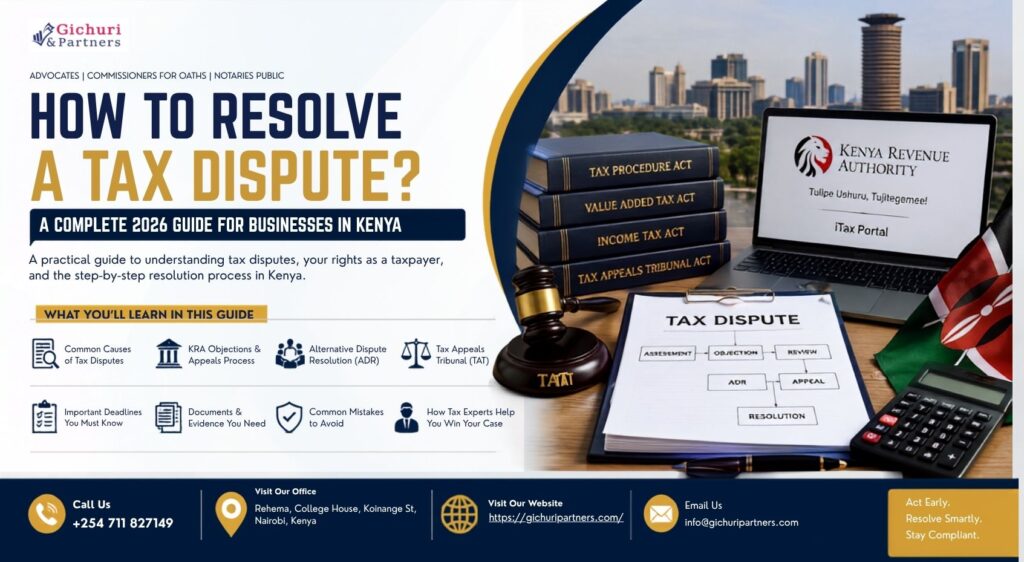


What to Do When You Receive a KRA Tax Demand Letter. When you receive a tax demand letter from KRA, the obvious reaction is panic, followed by anxiety and stress. But I paid my taxes religiously. I filed my returns as expected. What happens now? Will they forcefully recover their debt? Will they freeze my business and corporate accounts?
While a KRA tax demand letter is serious, it’s not final. It’s not the end of the road for you- you can challenge the tax demand if you believe it’s incorrect. How you respond to a demand letter makes all the difference- it may escalate the matter or resolve it easily. In this guide, we explain what to do when you receive a KRA tax demand letter. Keep reading to learn how.
What is a KRA Tax Demand Letter?
A KRA tax demand letter is a formal notice from the Kenya Revenue Authority (KRA) informing a taxpayer of unpaid or outstanding taxes, penalties, and interest. This demand relates to the various taxes in Kenya, including Income Tax, VAT, Withholding Tax, MRI Tax, and PAYE.
Note: A tax demand letter is different from an enforcement action. It’s basically a notification, mostly in the form of an email notification, physical mail, or an iTax ledger notification. Therefore, a KRA tax demand letter serves a major purpose- it allows you to settle unpaid taxes, explain yourself, or dispute a tax assessment.
Why KRA Issues a Tax Demand Letter to Taxpayers in Kenya
KRA issues tax demand letters for several reasons, usually triggered by both intentional and unintentional non-compliance. These reasons include:
- Late payment of declared taxes.
- Non-payment of declared taxes.
- Discrepancies between filed returns and third-party data on iTax.
- Failure to file returns (NIL returns included).
- System-generated assessments based on tax estimates.
- Findings from a tax audit or tax assessment.
Note: Most tax demand letters originate from system-generated assessments, rather than detailed human review. It’s critical that you review and reconcile the tax demands with your tax records to rule out data mismatches and technical errors before taking action.
What to Do When You Receive a KRA Tax Demand Letter
Here’s a practical guide on what to do when you receive a KRA tax demand letter:
1. Don’t Panic, But Don’t Ignore the Letter Either
No one likes being ignored, certainly not the KRA. Ignoring a formal notice comes across as being passive-aggressive or dismissive, which may escalate a simple misunderstanding into an expensive dispute. When you receive a tax demand letter, don’t panic. Note the deadlines, but don’t act yet. Rushed payments may result in unnecessary financial loss. Be calm, and if unsure, consult a tax consultant.
2. Review the Tax Demand Letter Carefully
Once you’ve composed yourself, carefully review the tax demand letter to determine the following:
- The tax type.
- The tax period.
- The principal tax, penalties, and any interest charged.
- The demand (payment, clarification, etc)
- The deadline for a response.
Confirm whether this is a system-generated demand letter or one based on a specific, detailed human assessment or tax audit.
3. Reconcile the Demand Letter with Your Tax Records
Reconcile the demands in the letter with your existing tax records, including filed returns for the tax type and tax period under review. Check your M-Pesa records, bank statements, tax certificates, and other relevant records. With a proper reconciliation, you can tell whether the demand is valid or invalid. If the latter is true, you can prepare to object to the tax decision. But if it’s valid, you can devise a payment plan or apply for a waiver if applicable.
4. Make a Decision
Once you’ve reviewed the tax demand letter and reconciled it with your records, the next step is to make a decision and take action before the deadline. Three options are available. Let’s look at each of them below.
Option #1: Pay the Tax Demand
If the demand is valid and undisputed according to the tax records, paying the dues is the most cost-effective method. The earlier you pay the unpaid taxes, the better. Paying on time helps avoid penalties and interest. It also prevents the shame, time wastage, and costs associated with KRA enforcement actions. If you can’t afford the payment at the moment due to cashflow issues, a tax agent can help you negotiate for a payment arrangement with KRA.
Option #2: Object to the Tax Demand
What if you disagree with the demand? Maybe you noticed a computation error, ian ncorrect tax type, or a disputed tax amount? The obvious step here is to object to the tax decision before the deadline. We’ve explained in detail the procedure for objection to a tax decision in Kenya in this article. This is a critical step, and you’re better off working with a tax expert to do it correctly. A tax professional will help you draft a well-structured objection letter and lodge it via iTax.
Option #3: Ask for Clarification from KRA
In some cases, the tax demand letter might be unclear. Instead of objecting blindly or paying the alleged taxes and penalties, you are allowed to request further clarification from KRA. This is especially true for system-generated demand letters, or those missing critical details.
How to Respond to a KRA Tax Demand Letter via iTax
There are various paths to respond to a KRA tax demand letter. You can ask for further clarification through email, visit your nearest KRA office for assistance, or respond via the iTax portal. If you’ve chosen the iTax path, here is what it involves;
- Make the demanded payment and ensure it reflects on your iTax account.
- Lodge a notice of objection (where suitable).
- Upload all supporting documents.
- Use iTax to track response timelines and feedback from KRA.
Consequences of Ignoring a KRA Tax Demand Letter
The worst you can do is ignore a KRA tax demand letter, as it has severe consequences. These include:
- Penalties and interests will accumulate and may cost you a lot when KRA forcefully recovers its debt.
- Enforcement through debt recovery agencies.
- Freezing of bank accounts.
- Disruption of business operations and the smooth running of your company.
Ignoring the demand letter only leads to escalation of the matter, which will cost you more money, time, and peace of mind.
Common Mistakes Taxpayers Make When Responding to a KRA Tax Demand Letter
Avoid these mistakes when responding to a KRA tax demand letter:
- Paying the demanded taxes without verification.
- Missing KRA timelines and deadlines.
- Submitting irrelevant or unsupported formats of documentation.
- Making emotional submissions instead of presenting facts and evidence-based legal arguments.
- Handling complex demand letters without professional support.
How a Tax Agent Can Help You Respond To a KRA Tax Demand Letter Efficiently
A qualified tax agent can make all the difference when handling a KRA tax demand letter. They bring experience, confidence, structure, and technical expertise to the process. Here’s how a tax agent can help you respond to a KRA tax demand letter like a pro:
- Reviews and validates the KRA tax demand letter.
- Reconciles the iTax records to identify potential errors.
- Offers objective and professional advice on the best way forward- settle, object, or escalate the matter.
- Prepares strong objections and supporting documentation to raise your winning chances.
- Offers professional representation during tax audits, oral submissions to the Independent Review of Objections (IRO), and the Tax Appeals Tribunal in case the matter escalates.
Final Words
While a KRA tax demand letter is not something to fear or make you panic, you should take it seriously. We’ve explained what to do when you receive a KRA tax demand letter, including reviewing it carefully before taking action and seeking professional guidance from a tax agent. Have you received a KRA tax demand letter? Contact Gichuri & Partners for professional and reliable support.